How to Clean Tarnished Jewelry Without Damaging It

If you’ve ever opened your jewelry box and found your favorite necklace, bracelet, or earrings looking dull, dark, or not quite as beautiful as you remember, you’re not alone.
This is something I see all the time while restoring vintage jewelry for SWS Vintage. There are so many jewelry cleaning hacks online and harsh DIY solutions. While some methods may work for certain situations, they are not always safe for vintage jewelry, gold plating, or delicate finishes.
In this guide, I’ll share how to clean tarnished jewelry safely.
What Causes Jewelry to Tarnish?
Tarnish is a natural process that happens when certain metals react with the environment. Over time, jewelry can be affected by things like air exposure, humidity, sweat and body oils, perfume and lotions, and even household chemicals.
Silver jewelry is especially known for tarnishing because it reacts with elements in the environment and develops that darker, dull appearance. But tarnish does not mean your jewelry is ruined.
Before Cleaning Your Jewelry, Identify the Material
Sterling Silver Jewelry
Sterling silver is one of the easiest materials to restore. The tarnish is usually only affecting the surface, and gentle polishing can bring back its original shine.
Gold-Plated Jewelry
Gold-plated jewelry requires more caution. The gold layer is extremely thin, and harsh cleaners or aggressive scrubbing can wear away the plating over time.
Vintage Jewelry
Vintage jewelry deserves extra care because many pieces have:
- Older finishes
- Delicate settings
- Glued stones
- Unique materials
A vintage piece may have survived decades, but that does not mean it should be cleaned the same way as a brand-new piece of jewelry.
How to Clean Tarnished Jewelry Safely
Step 1: Inspect Your Jewelry
Identify the material and any details, such as gemstones, faux pearls, rhinestones, or other decorative elements.
Step 2: Remove Surface Dirt
Before removing tarnish, gently wipe your jewelry with a soft microfiber cloth and/or give it a rinse under soap and water. This removes everyday buildup like oils from your skin, makeup, dust and lotion residue. Sometimes the piece just needs a simple wipe down.

Step 3: Use a Gentle Jewelry Polish
When removing tarnish, the goal is not to scrub as hard as possible. The goal is to remove tarnish while protecting the original finish of the jewelry.
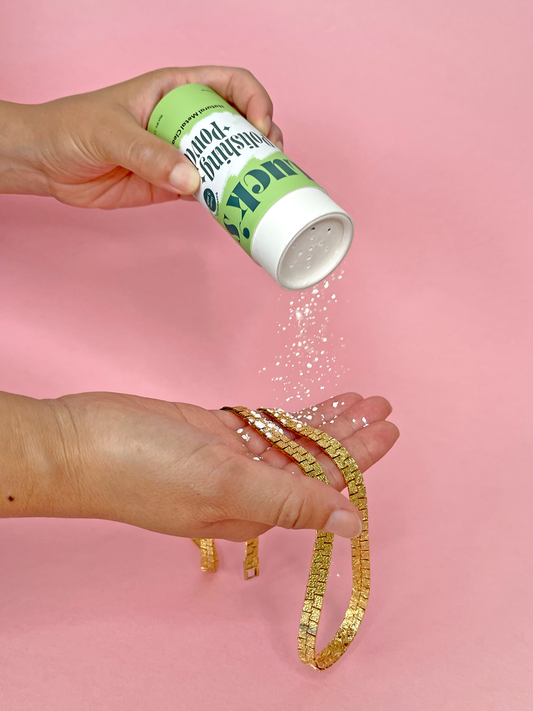
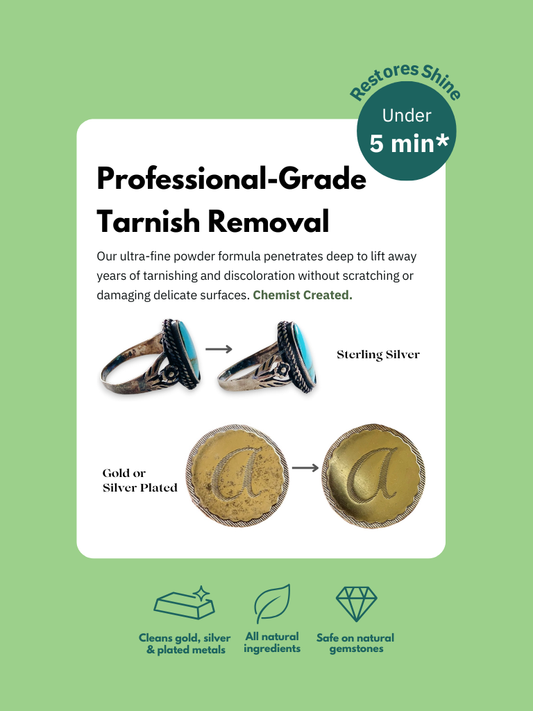
As a chemist, that is why I created Luck’s Polishing Powder. I wanted a polishing solution that could help remove tarnish and restore shine while still being gentle enough for the vintage jewelry I work with every day.
Step 4: Polish Gently
When polishing tarnished jewelry:
- Use light pressure
- Work slowly
- Focus on tarnished areas
You do not need aggressive scrubbing to get results.

Using Luck's Polishing Powder for cleaning tarnished jewelry
FAQs
Can tarnished jewelry be restored?
Yes. In many cases, tarnished jewelry can be restored with the proper cleaning techniques. Tarnish is often a surface issue and does not mean your jewelry is permanently damaged.
What is the best way to clean tarnished jewelry?
The safest method depends on the material, but gentle jewelry polishing products designed for jewelry are usually the best option. Avoid harsh methods that can scratch or remove finishes.
Bring Your Jewelry Back to Life
One of my favorite parts of working with vintage jewelry is seeing the transformation. Jewelry is meant to be worn, loved, and enjoyed.
If you’re looking for a gentle way to restore your jewelry’s beauty, give Luck’s Polishing Powder a try!
 Restored vintage jewelry after using Luck's Polishing Powder